
Museo Egizio in Turin: Complete Guide to Italy’s Temple of Ancient Egypt
Museo Egizio in Turin is the world's oldest museum devoted entirely to Egyptian civilization, founded in 1824.
4/28/20265 min read
Key Takeaways
Museo Egizio in Turin is the world’s oldest museum devoted entirely to Egyptian civilization, founded in 1824 and celebrating its bicentennial in 2024
The collection includes more than 40,000 artifacts, with approximately 10,000 on display across 12,000 square meters, covering over 4,000 years of history
Must-see highlights include the Tomb of Kha and Merit, the Gallery of the Kings with its colossal statues, and the Ellesiya Rock Chapel
Located at Via Accademia delle Scienze 6 in central Turin, with full tickets priced at €18
Admission is guaranteed only with online booking, especially critical during peak periods
Introduction to Museo Egizio
The Museo Egizio in Turin holds the distinction of being the second most important egyptological collection in the world after Cairo, and the oldest museum dedicated entirely to ancient egyptian culture. Housed in the 17th-century Palazzo dell’Accademia delle Scienze—a historic Baroque palace in Turin’s center—this egyptian museum attracts over one million visitors annually.
The collection spans from the Paleolithic era through the Coptic period, illustrating daily life, religion, art, and funerary practices across ancient egypt. Following a massive renovation completed in 2015, the museum reopened with a new layout spanning 12,000 square meters over four floors. Renovations introduced multimedia installations, virtual reconstructions, and even scent boxes related to exhibits, transforming it into a contemporary institution. For anyone visiting northern Italy with a dream of exploring ancient civilizations, this museum is essential.
History of the Museo Egizio
The museum’s roots trace back to the Savoy dynasty’s passion for Egyptology, with the 1630 acquisition of the Mensa Isiaca marking a symbolic starting point. The museum was officially founded in 1824 by King Charles Felix of Savoy to house the collection of Bernardino Drovetti, which consisted of over 5,000 egyptian antiquities.
The institution proved foundational to early Egyptology, supporting scholars like Jean-François Champollion in deciphering hieroglyphics. Champollion studied the Turin King List here—a historic papyrus listing over 300 Egyptian rulers and the duration of their reigns.
Key milestones include:
Year - Event
1824 - Museum founded with Drovetti collection
1903-1937 - Expeditions added approximately 30,000 finds
1906 - Discovery of intact Tomb of Kha
2015 - Major renovation completed
2024 - Bicentennial anniversary celebrated
Today, the museum is an active center for international research, conservation, and digital epigraphy.
Highlights of the Collection
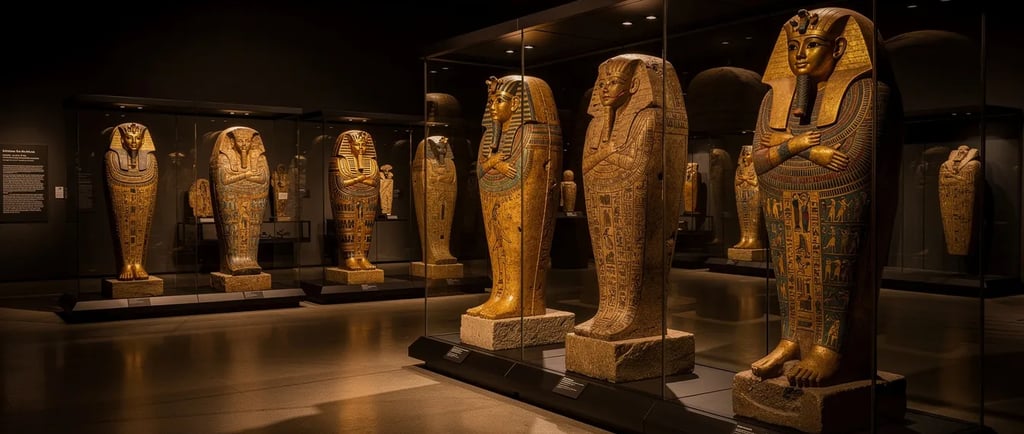
More than 10,000 objects are on display, but certain masterpieces are considered unmissable. The Museo Egizio’s collection includes statues, papyri, sarcophagi, and everyday objects, showcasing over 4,000 years of history, art, and archaeology.
Notable items include the Papyrus of Iuefankh—the longest preserved papyrus in the museum, measuring nearly 19 meters—alongside statues of deities, jewelry, tools, and cosmetics containers that illustrate Nile Valley daily life. Explanatory panels and multimedia stations help visitors without specialist backgrounds explore these treasures.
The Tomb of Kha and Merit
The Tomb of Kha and Merit was discovered in 1906 and contains an intact burial chamber with sarcophagi, furniture, jewelry, and ancient food. Kha served as an architect and overseer during Egypt’s 18th Dynasty; Merit was his wife. Egyptologist Ernesto Schiaparelli found their tomb at Deir el-Medina completely undisturbed.
The dedicated gallery houses over 500 objects, displayed with dim lighting to evoke the tomb’s atmosphere. Visitors can view nested coffins, funerary beds, and work tools. One notable artifact is Merit’s wig, made from locks of human hair and decorated with flowers and tiaras, highlighting the refinement of ancient Egyptian fashion.
The Gallery of the Kings
The Gallery of the Kings features monumental granite and sandstone statues under theatrical lighting. The Statue of Ramesses II—a 13th-century BC granodiorite sculpture often considered a masterpiece of Egyptian art—dominates the space alongside seated figures of Seti II and sphinxes.
The layout creates an almost temple-like atmosphere: long corridors, illuminated pedestals, and reflections on polished floors. These royal images originally served propaganda purposes, reinforcing the divine authority of the kings. Modern museography—careful lighting and spacing—enhances the emotional impact compared to past “cabinet of curiosities” displays.
The Ellesiya Rock Chapel
The Ellesiya Rock Chapel is an authentic temple carved from ancient Egyptian rock during Pharaoh Thutmose III’s reign in the 15th century BC. Originally located in Nubia near the Nile’s Second Cataract, it faced destruction during Aswan Dam construction in the 1960s.
The Temple of Ellesiya is a rock-cut temple gifted to Italy by the Egyptian government for its assistance in rescuing Nubian monuments—thanks to Italian participation in the UNESCO Nubia Campaign. The chapel was transferred stone by stone to Turin.
Reservations are required to visit the Ellesiya Rock Chapel, which is accessible independently and free of charge. Visitors step into an intimate sacred space with carved reliefs, hieroglyphic texts, and traces of polychromy. Panels recount the relocation story, highlighting international cultural cooperation.
Visitor Experience and Exhibition Layout
The museum’s layout guides visitors through 4,000 years of history, from the Paleolithic to the Coptic era, organized across multiple floors following chronological and thematic paths.
A typical visit route includes:
Introductory section on Egypt’s geography and history
Galleries on daily life, religion, and funerary culture
Major highlights: Tomb of Kha, Gallery of the Kings, Ellesiya Chapel
The exhibition design features wide corridors, controlled lighting, and clear bilingual labels in Italian and English. Guided tours and audio guides are available. Services include a cloakroom, bookshop with Egyptology titles, and café. Allow 2-3 hours for a standard visit; enthusiasts may need 4+ hours.
Practical Information for Your Visit
Detail - Information
Address - Via Accademia delle Scienze 6, 10123 Turin
Phone - +39 011 5617776
Hours - Tuesday-Sunday: 9:00 AM–6:30 PM; Monday: 9:00 AM–2:00 PM
Full Ticket - €18 (reduced rates available)
The museum is located in the historic center close to Piazza Castello and Via Roma. The full price for a ticket to Museo Egizio is €18, with various promotions and packages available on the museum’s website.
Critical: Admission to the museum is guaranteed only with online booking. This is especially important during weekends, holidays, and special exhibitions. The museum is generally accessible to visitors with reduced mobility via elevators.
FAQ
How long does a typical visit to Museo Egizio take?
Most visitors spend between 2 and 3 hours exploring the collection. History enthusiasts may easily stay 4+ hours. Families with children often prefer a 90-minute highlight route focusing on the Tomb of Kha, Gallery of the Kings, and mummies.
Is the museum suitable for children and school groups?
Yes—visually striking statues, mummies, and reconstructions capture children’s imagination effectively. Educational materials, guided visits, and workshops are available for schools. Teachers should contact the museum for specific didactic programs.
In which languages are explanations available?
Labels and panels appear in Italian and English. Audio guides and some guided tours may be offered in French, Spanish, or German, subject to availability and advance booking.
Can I take photographs inside Museo Egizio?
Non-flash photography for personal use is generally allowed. Tripods, flashes, and professional equipment may be restricted. Check on-site signs, as certain rooms or temporary exhibitions have specific limitations.
Are there combined tickets with other Turin attractions?
Combined passes like the Torino+Piemonte Card sometimes include free or discounted entry. Check current offers on the museum’s official site or Turin tourism portal when planning your itinerary.
© Torinocard.org 2026. All rights reserved.
Privacy Policy. Terms and Conditions.
This website is an independent guide created by history lovers and local Turin experts. Please note that this is not the official website of the Torino City Card. Our mission is to provide high-quality information, historical context, and logistical support for visitors in Turin.
We take pride in only recommending and selling 100% official and authorized tickets sourced through licensed primary and secondary providers. By booking through our links, you ensure a valid entry into the monument. To support our local research and the maintenance of this guide, we may earn a small affiliate commission from your purchase.
🔒 Secure 256-bit SSL Encryption — Your data is protected by the highest 2026 security standards.
🤝 Official Authorized Partner — We only provide 100% valid, official city cards.
📱60-Second Digital Delivery — Get your voucher instantly on your smartphone. No printing required.
🇪🇺 GDPR & LOPD Compliant — We respect your privacy and the European data protection laws.